Building a crypto exchange in 2026 costs anywhere from $15,000 for a lean MVP to over $500,000 for an enterprise platform — and the gap between those numbers comes down to one thing: what exactly you’re building and for whom.
Most cost guides online give you a vague range and stop there. This one doesn’t. Whether you’re a startup founder trying to validate a market idea, a fintech team planning a full-scale trading platform, or an investor evaluating a blockchain project, you’ll find real 2026 costs. estimates broken down by exchange type, feature, development approach, and the hidden expenses most budgets forget entirely.
From white-label solutions that can be deployed in weeks to bespoke centralized exchanges that take 12+ months to build, each approach has its own price — and its set of compromises. Here’s the complete picture.
Average Crypto Exchange Development Cost in 2026
How much does it cost to develop a crypto exchange in 2026? From $15,000 to $500,000+, depending on the kind of exchange you need, what features you want, and whether you choose a white-label solution or build from scratch.
Here’s a quick snapshot:
| Exchange Type | Estimated Cost (2026) | Development Time |
| MVP Exchange | $15,000 – $40,000 | 2–4 months |
| White Label Exchange | $20,000 – $60,000 | 1–3 months |
| Centralized Exchange (CEX) | $80,000 – $200,000 | 6–12 months |
| Decentralized Exchange (DEX) | $50,000 – $150,000 | 4–9 months |
| Hybrid Exchange | $100,000 – $250,000 | 8–14 months |
| Enterprise Exchange | $250,000 – $500,000+ | 12–24 months |
These are realistic ranges based on current market rates for blockchain developers, infrastructure costs, and compliance overhead in 2026.
Cost by Exchange Type
Centralized Exchange (CEX) Development Cost
A centralized exchange operates like a traditional stock exchange — a central authority manages order matching, user funds, and liquidity. Building one from scratch requires significant backend engineering.
Cost range: $80,000 – $200,000
What drives this cost up:
- High-performance matching engine capable of processing 100,000+ trades per second
- Custodial wallet infrastructure with hot/cold wallet management
- KYC/AML onboarding systems
- Admin panels, reporting dashboards, and risk management tools
- Fiat on-ramp and payment gateway integration
A mid-range CEX targeting 10,000–50,000 daily active users typically lands around $120,000–$160,000 when built by an experienced crypto exchange development company.
Decentralized Exchange (DEX) Development Cost
DEXs use smart contracts to facilitate peer-to-peer trading without a central intermediary. They’re technically complex in different ways than CEXs—the focus shifts from backend infrastructure to smart contract auditing and on-chain logic.
Cost range: $50,000 – $150,000
Key cost drivers:
- Smart contract development and deployment (AMM, order book, or hybrid model)
- Multi-chain support (Ethereum, BNB Chain, Solana, etc.)
- Front-end interface (Web3 wallet connection, liquidity pool UI)
- Smart contract security audits—non-negotiable and often $10,000–$30,000 alone
- Gas optimization work
A standard AMM-based DEX similar in scope to early Uniswap builds tends to cost $70,000–$100,000 in 2026.
Hybrid Exchange Development Cost
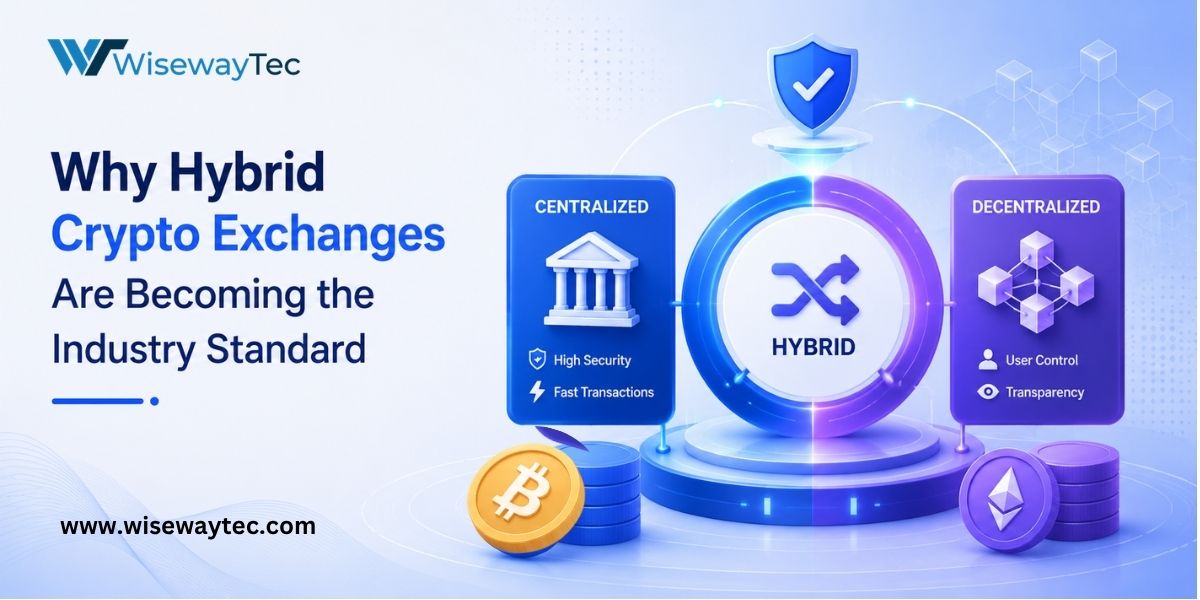
Hybrid exchanges combine the speed and liquidity of centralized systems with the self-custody benefits of decentralized architecture. They’re the most complex to build but are growing in demand.
Cost range: $100,000 – $250,000
The higher price reflects the need to develop and maintain two separate technical layers — a centralized order book and on-chain settlement — that must communicate reliably without compromising security or user experience.
Key Factors Affecting Crypto Exchange Development Cost
An understanding of what drives prices up or down allows you to create better budgets.
- Development Methodology: Developing from scratch is the most expensive route. A white-label or open-source framework can help to save 40-70% of the cost.
- Team Location: North American and Western European developers charge $100–$200/hour. Eastern European and South Asian teams typically charge $30–$80/hour, producing output with comparable quality of work, which is one of the main reasons that companies offshore their blockchain development.
- Feature Complexity: An elementary exchange with spot trading is much cheaper than one offering margin trading, futures, staking, and DeFi yield.
- Blockchain Networks Supported: Each blockchain you want to support (Ethereum, Solana, Polygon, Bitcoin) will add to your development, testing and maintenance costs
- Regulatory Requirements: If an exchange is targeting US, EU, or UK markets, it will face stringent licensing and compliance requirements — often costing $20,000 to $80,000 in legal and technical compliance costs.
- Security Standards: A platform that’s actually touching real user funds has to commit to penetration testing, multi-signature wallets, and real-time fraud detection, like it’s part of the job, not some optional little add-on. These aren’t negotiable line items, either.
Feature-Wise Cost Breakdown
Here’s how individual features typically contribute to overall cryptocurrency exchange development cost:
| Feature | Estimated Cost |
| User Registration & KYC | $3,000 – $8,000 |
| Trading Engine (Matching Engine) | $15,000 – $40,000 |
| Wallet Integration (Multi-currency) | $8,000 – $20,000 |
| Admin Dashboard | $5,000 – $12,000 |
| Liquidity API Integration | $5,000 – $15,000 |
| Mobile App (iOS + Android) | $20,000 – $50,000 |
| Charting & Market Data Tools | $3,000 – $8,000 |
| Fiat Gateway Integration | $5,000 – $15,000 |
| Staking / Yield Module | $10,000 – $25,000 |
| Margin / Futures Trading | $15,000 – $35,000 |
| API for Third-Party Traders | $5,000 – $12,000 |
Custom vs White Label Exchange Cost
One of the most common decisions businesses face is whether to build a custom crypto trading platform or use a white-label solution.
|
Criteria |
Custom Development |
White Label Solution |
|---|---|---|
| Cost | $80,000 – $500,000+ | $20,000 – $60,000 |
| Time to Launch | 6–18 months | 4–12 weeks |
| Flexibility | Full control | Limited customization |
| Ongoing Maintenance | Higher | Shared or managed |
| Scalability | Built to your specs | Depends on vendor |
| Branding | Fully custom | White-labeled with your branding |
White-label crypto exchanges are a great solution for companies that want to launch quickly, test a market, or serve a niche without affording a complete custom development option. The downside is limited control over the core infrastructure.
On the other hand, custom development suits companies with a distinctive product concept, aiming for rapid expansion, or requiring an exclusive technical edge
Hidden Costs Businesses Often Ignore
Most discussions about the cost of developing a crypto exchange fail to acknowledge ongoing expenses. In fact, there are many running and setup costs that matter just as much, if not more, and quite a few companies find out about them years after.
- Liquidity Integration ($5,000, $20,000 setup + ongoing fees) One of the problems with a new exchange is that there is naturally going to be little trading volume. That is why order books tend to be empty at such new exchanges. The solution is for most operators to connect with liquidity providers such as B2C2 or Wintermute, or use API aggregators like 0x or Fireblocks. So it’s clear that one will not only have to pay a setup and ongoing API fees, but these costs are real.
- Security Audits ($8,000, $40,000 per audit): Smart contract audits for DEXs by CertiK, Hacken, or Trail of Bits are a must. Security testing of infrastructure and periodic security reviews are equally important for CEXs. Here, it is not a one-time expenditure; one should budget for yearly or twice-yearly audits.
- Compliance & Licensing ($20,000–$200,000+ ) The licensing requirements vary according to the region you are planning to operate in, e.g., you might get an MSB license (US), VASP registration (EU), or FCA registration (UK). Expenses such as legal fees, compliance software (like Chainalysis or Elliptic), and continuing regulatory reporting are likely to accumulate quickly.
- Cloud Hosting & Infrastructure ($2,000 – $15,000/month) A production-grade exchange requires high-availability cloud infrastructure, CDN, load balancers, and database redundancy. AWS, Google Cloud, or Azure costs scale with your user base.
- Customer Support ($3,000 – $20,000/month) Users lose funds, forget passwords, and have verification issues all the time. Whether you hire in-house support agents or outsource, this is an operational expense you cannot negotiate away.
- Maintenance & Updates ($1,500 – $8,000/month) The crypto world never stops evolving – new chains, protocol upgrades, regulatory changes. Prepare for ongoing development beyond launch day.
Total first-year hidden cost estimate: $60,000–$350,000 depending on exchange scale.
Crypto Exchange Development Cost Calculator
Use these inputs to estimate your project budget:
Getting started: selecting your exchange type
- MVP / Proof of Concept → Base: $15,000
- White Label Exchange → Base: $25,000
- Centralized Exchange → Base: $80,000
- Decentralized Exchange → Base: $50,000
- Hybrid Exchange → Base: $100,000
Next, define the key features
- Mobile apps: +$30,000
- Margin/futures: +$25,000
- Staking module: +$15,000
- Fiat gateway: +$10,000
- Multi-chain support (per chain): +$8,000
Finally, calculate Year 1 operational costs
- Security audit: +$15,000
- Compliance setup: +$30,000
- Hosting: +$36,000 (estimate)
- Maintenance: +$36,000 (estimate)
Example: A CEX with mobile apps, a fiat gateway, and basic compliance for the EU market: $80,000 (base) + $30,000 (mobile) + $10,000 (fiat) + $30,000 (compliance) + $51,000 (hosting + maintenance) = ~$201,000 in Year 1
How to Reduce Development Costs Without Sacrificing Quality
Cutting costs on a crypto exchange doesn’t have to mean cutting corners. Here are practical strategies:
- Start with an MVP launch with core trading features—spot trading, wallets, KYC, and a basic dashboard. Add advanced features after you validate your market and generate revenue.
- Use a White-Label Base Even if you plan to customize heavily, starting with a vetted white-label crypto exchange solution can save 3–6 months of foundational development.
- Choose the Right Development Partner An experienced crypto exchange development company with a proven portfolio often delivers faster and more reliably than assembling a freelancer team. Vet for specific blockchain experience, not just general software background.
- Use Open-Source Components Charting libraries, KYC SDKs, and blockchain node clients are often open-source. There’s no need to build from scratch what already exists and is battle-tested.
- Phased Development Break the project into phases. This improves cash flow management and gives you feedback loops to adjust priorities before spending your full budget.
Future Trends Impacting Costs in 2026
Right now, a bunch of emerging things are quietly reshaping what it costs to build and run a crypto exchange. Not only the engineering part, but also how people expect the product to feel day to day. And yeah, these changes keep stacking.
AI-driven trading features are becoming the new “baseline” people mention in sales calls. Exchanges are increasingly expected to include AI-powered price alerts, more tailored dashboards, and fraud detection that looks beyond simple rules. If you integrate that properly, it can tack on about $15,000–$40,000 to the initial build, and it’s sort of turning into a competitive need, not a nice extra.
Agentic AI Integration
Then there’s agentic AI, basically systems of autonomous AI that can execute trades, rebalance portfolios, or do yield optimization in a user’s stead. It sounds fancy, but making it reliable is complicated, so it adds meaningful cost. Still, more advanced users are actively asking for it.
DeFi Integration
Also, a lot of centralized exchanges are bundling DeFi capabilities right inside the UI. Think yield farming, liquidity provision, and on-chain swaps all in one place. Each feature integration calls for smart contract know-how, plus extra auditing time. That alone can become a real cost driver.
Cross-Chain Trading
People increasingly want to trade across Ethereum, Solana, BNB Chain, and more, without doing the manual bridging dance. Cross-chain swap infrastructure is where the numbers start to jump, adding roughly $20,000–$50,000 in development, but users usually stick around longer once it’s there.
MPC Wallets
Finally, enterprise teams are moving toward MPC wallets rather than the classic hot/cold wallet split. The upside is better security and fewer single points of failure. Still, integrating MPC wallet infrastructure, maybe via providers like Fireblocks or Privy, can add about $10,000–$30,000. It’s just getting more and more standard for institutional-grade platforms, so ignoring it tends to cost you later.
Why WisewayTec Is the Right Partner for Your Crypto Exchange
Choosing a development company is just as important as choosing the right exchange model. You need a team that understands blockchain architecture, compliance requirements, and real-world trading infrastructure — not just one that can write code.
WisewayTec is a full-cycle crypto exchange development company with hands-on experience building CEX, DEX, hybrid, and white-label trading platforms for startups, fintech businesses, and enterprise clients. Their team doesn’t just hand over a product at launch—they work with you through planning, architecture, compliance integration, security auditing, and post-launch support to make sure your platform is built to last.
If you’re serious about launching a crypto exchange in 2026, WisewayTec is worth the conversation.
Conclusion
Building a crypto exchange in 2026 is a significant investment—but it’s far more achievable than most people assume when you approach it with a clear budget framework and the right partner.
The core takeaway: don’t budget for development alone. Factor in security audits, compliance, infrastructure, and the first 12 months of operations from day one. The exchanges that struggle most are the ones that launch lean on features and find themselves unable to cover the operational costs that follow.
Whether you’re starting with an MVP or planning an enterprise-grade trading platform, the right development partner makes a measurable difference in both cost and outcome.
Frequently Asked Questions
Q1: What is the minimum cost to build a crypto exchange in 2026?
The average cost ranges from $15,000 for basic platforms to over $500,000 for enterprise-grade exchanges.
Q2: Which type of exchange is more affordable?
White-label exchanges are generally more affordable than fully custom-built platforms.
Q3: How long does it take to develop a crypto exchange?
Development timelines can range from 2–3 months for basic solutions to 12 months or more for enterprise platforms.
Q4: Why is security important in crypto exchange development?
Strong security measures protect user funds, reduce vulnerabilities, and help build trust among traders.